Zobrazuji: 21 - 30 z 31 VÝSLEDKŮ
Welcome to my head

Stop apologising for your English

Firstly, if you want to practise key vocabulary and read this article using the Duocards app (where you can tap on a word you don’t understand and it will show you the meaning), you need to join my email list. I will share these links there. You can join here.

Vital words for understanding

Apologise – to say sorry for something you did or said.

Reflect – to think deeply or carefully about something.

Resort to – to do something (often a bad or extreme action) because you have no other choice.

Justify – to give a reason or explanation for something to show it is fair or correct.

Frustrating – making you feel annoyed, upset, or discouraged.

Embarrassing – making someone feel ashamed, uncomfortable, or self-conscious.

Self-doubt – a lack of confidence in yourself or your abilities.

Ignorant – lacking knowledge or awareness about something.

Diplomacy – the skill of dealing with people or governments in a respectful and effective way.

Turmoil – a state of great confusion, disorder, or uncertainty.

Inferior – lower in quality, status, or ability compared to someone else.

Discourage – to make someone feel less confident or motivated to do something.

„I apologise for my English.“

This single sentence made me stop and reflect.

You’re probably well aware of the political turmoil in the world right now. I follow it, but I hesitated to write about it. That’s why I went two weeks without publishing anything. I was searching for a different topic—something about English learning. But then I thought: I can’t not talk about this.

I’ll try to stay neutral. Those who know me already understand where I stand, and frankly, I have no need to justify my views. So let’s return to that opening sentence: I apologize for my English.

When I heard it, it broke my heart. Not because of my work, my message, or my teaching. But because I know how painful, frustrating, and exhausting it is to feel the need to say those words.

And you know what frustrates me the most? The people who say this are the ones who shouldn’t feel this way at all.Speaking a foreign language is not embarrassing. It’s not weird, stupid, or laughable. It’s badass. It’s brave. It’s cool.

So where does this self-doubt come from? Why do language learners feel the need to apologize? Why are they so critical of themselves?
Is it society? The school system? Family? I honestly don’t know, and I’d love to hear your thoughts.

What I do know is this:
The people who should be ashamed of themselves often have the most confidence. The truly ignorant are the loudest.

And you can see this everywhere – even in places that are supposed to represent intelligence, class, and diplomacy.

Take, for example, a certain recent political event. Watching it from a professional perspective, as a language teacher, was mind-blowing. In a conversation between native and non-native speakers, how is it possible that the foreigner spoke English more clearly than the native speakers? Because language isn’t just about how you sound – it’s about what you say.

One side communicated in a foreign language. The other two? Native speakers. And yet, they resorted to yelling at someone who might not have had the same vocabulary, who might not have fully understood their accent. Come on.

And this, right here, is what’s wrong with society.

English learners work hard every single day to understand and be understood. That is the power of language. And if someone’s English is stronger, the right thing to do is help the other person understand you. That’s the whole reason we learn languages – to communicate.

So what does it say about people who enjoy making others feel lost and inferior?

I’ll let you decide.

If you’re reading this, thank you for sticking around. I just want to add a few words of encouragement because I know the message was quite heavy.

The good people – the ones who truly matter – will treat you with kindness and respect, no matter how many mistakes you make. Please don’t let negativity or ignorance discourage you, and never let it make you give up.

Yes, there will always be someone who tries to bring you down. But you? You just need to stay patient, stay strong, and keep going.

And remember – I’m always in your corner! 💙

Welcome to my head

Can a chatbot improve your English? 

Firstly, if you want to practise key vocabulary and read this article using the Duocards app (where you can tap on a word you don’t understand and it will show you the meaning), you need to join my email list. I will share these links there. You can join here.

Vital words for understanding

Overthinking – Thinking too much about something, often in a negative way.

Fluency – The ability to speak a language smoothly and naturally.

Role-play – Acting out a situation to practice language or skills.

Synonyms – Words that have the same or similar meaning.

Antonyms – Words that have opposite meanings.

Nuance – A small difference in meaning, expression, or sound.

Implicit learning – Learning naturally through exposure, like picking up phrases from conversation.

Minimal pairs – Two words that differ by only one sound (e.g., ship vs. sheep).

Comprehension – The ability to understand something, especially reading or listening.

Personalized – Designed for a specific person’s needs or interests.

Speech-to-text – A tool that converts spoken words into written text.

Neuroplasticity – The brain’s ability to change and learn new things.

Explicit learning – Learning with conscious effort, like studying grammar rules.

Pronunciation – The way a word is spoken.


I was not sure what to write about today until I had an idea – maybe a chatbot can help me feel better. 

I am having one of the happiest, but also one of the most intense times. Some days there are things I cannot get out of my head and I keep overthinking. 

So today, when I was thinking about the same stupid situation for the millionth time, I decided to try a chatbot. I prefer to use ChatGPT, I have the app in all my devices. I had already tried this feature a year ago to get my piano basics down. Since then I have heard that it can also help you on the mental side of things. It can help you with everything from emotional support to learning English. I think that’s what we’re most interested in. Let’s take a closer look. 

First of all, here are some tips on how to learn with a chatbot

It’s good conversation practice that you can do every day. It can definitely improve your fluency faster than weekly sessions with a person. You can also simulate real-life situations (like ordering food, small talk, or job interviews) and even role-play these situations. Easy to give instructions – and when I say easy, I still realize that giving clear instructions is one of the hardest things to do. 

This chatbot can explain grammar rules, give you examples, synonyms, antonyms, even word nuances. You can also ask it to provide you with vocabulary lists for different types of English. 

You can also work on your pronunciation. When you type a sentence and ask the chatbot for the correct pronunciation, you can see the sounds. A great thing I use with my clients is the speechtotext tool. This is very useful for you to practice and check if the chatbot understands what you mean (for example, one thing you can try right away: ship vs. sheep). These are called minimal pairs (words that differ in a sound but mean different things). 

It can even help you write. If you provide text, the chatbot can tell you where you make mistakes and help you correct them. You can even practice formal and informal writing. 

Another great asset is reading – you can generate comprehension questions based on a text you provide, you can discuss books and articles. You can even debate on various topics. 

It all comes down to one thing – instructions. Effective instructions. 

Some advantages of learning English with a chatbot: 

  • It’s always available. Now you have no excuses, it only takes a second to open the app. 
  • The chatbot does not judge you, so you can feel more comfortable making mistakes. I have to say here that any decent teacher will not judge you either and will be more supportive of you making mistakes than just producing correct language.  
  • It can be very personalized, so you only learn the things you want to learn. It doesn’t push you anywhere else. 
  • Of course, one of the advantages is that it’s a lot cheaper than having an experienced teacher. I think it’s about $20 a month. 
  • And the revision can be more effective because you’re only revising what you’ve already done. 

Now for some cons:

  • A chatbot can’t really replace the social interaction that we as humans generally need. 
  • Speech practice is limited for now. If you don’t use voice input, there’s no conversation. So you miss out on real speaking practice. 
  • It’s really nice for pronunciation, but it can’t give you realistic feedback. I tried it by mispronouncing the word „neuroscience“ and the chatbot apologized and said it’s sorry and I should try again later. Let me know if it worked for you. 
  • You can get to the point, you are relying too much on the AI. It’s still a bot, and you’re missing out on real-world practice with other people. 
  • Communication generally involves body language. That’s something you can only get from other people. 

There are some other things that just come to mind as I write. For example, I can see the positive impact on the neuroplasticity of our brains, because the more we engage with a language, the stronger our neural connections are. So daily conversations with chatbots would reinforce language patterns and vocabulary. Also, revision could be more effective because we could instruct the chatbot to follow our learning processes and design the best spatial repetition for us. Revision strengthens memory. 

Hormones play a significant role in how we use technology, so why not use it to our advantage? We can use the bot to make our learning interactive, for example to solve problems. This releases dopamine, and quick feedback makes learning more rewarding. In short, we can get addicted to learning. 

There is something called explicit and implicit learning. But I don’t think that’s an advantage of a chatbot. This is a principle I like to teach about: 

  • Implicit learning is learning like a child. When you chat with me (as a teacher) in full sentences, you automatically reinforce patterns – like when you hear I’ve been there many times, you start using it correctly without thinking about the rule. It’s unconscious learning done through conversation, not worrying about mistakes, and focusing on understanding meaning rather than grammar rules. 
  • Explicit learning is the adult way of learning. We ask for grammar explanations, study example sentences, analyze our mistakes, and keep our learning structured. 

The best way, you ask? Do both. 

I cannot help but think of one last thing here. For many, translation is a fact of life. It’s a cognitive load, which is how much information your brain can process at one time. Translation overloads our working memory and makes it harder to speak fluently. If you think in Czech, then translate into English, then speak, that’s three steps instead of one!

How to break this habit:

  • Start by forming simple thoughts and using short, direct sentences. 
  • You can practice recognizing complete English expressions. 
  • Use chunks or phrases as units (let me think, it depends) so that you are not constructing each sentence from scratch.
  • Think is pictures! That’s the best one. Instead of mentally translating, imagine, visualize (a dog for example). 

Oops, this is longer than I thought. Let me know what you think in the comments section below, or if you have any questions, I’m here to answer them.  Bottom line: I may be shooting myself in the foot, but I think using chatbots can be beneficial to your learning journey. So stop being afraid and just give it a try. 

Welcome to my head

How does music affect language learning?

Firstly, if you want to practise key vocabulary and read this article using the Duocards app (where you can tap on a word you don’t understand and it will show you the meaning), you need to join my email list. I will share these links there. You can join here.

Vital words for understanding

Sing along – To sing together with a song.

Pick up (a language) – To learn something naturally, without studying too much.

Have an ear for music – To be good at recognizing and understanding music.

Imitate – To copy the way someone speaks or acts.

Tactile – Related to the sense of touch.

Distinguish – To recognize the difference between two things.

Decipher – To figure out the meaning of something difficult to understand.

Limbic system – The part of the brain that controls emotions and memory.

Prerequisite – Something that must happen before something else can happen.

Retention – The ability to remember something for a long time.

Struggle a bit – To find something difficult but still try.

Amygdala – The part of the brain linked to emotions.

Hippocampus – A part of the brain that helps with memory and learning.

Absorb – To take in and learn something naturally over time.

I cannot learn English because I am not musical. I don’t have an ear for music.

Oh, how many times do you think I have heard that excuse? And I say excuse on purpose, so you know what this article is about. How music can help with language learning, not that it’s a prerequisite. 

Yes, music has a powerful effect on language learning. It affects pronunciation, vocabulary retention and much more. Be honest, how often do you find yourself knowing the words to a song without actually trying to learn them? And it stays with you, you remember it for years. 

Music and language have so much in common. They both involve sound processing, rhythm, memory and even emotion. Whenever there is an aspect of emotion, we tend to remember it better. Music also involves more areas of the brain, for example:

  • The temporal lobe, where sound is processed. This area of the brain allows you to distinguish between accents, for example. If you hear a person speaking English, you can probably tell where they are from. 
  • There’s also a temporal lobe that can decipher words and grammar. 
  • The limbic system and its famous amygdala, which is responsible for our emotions, and the hippocampus.

..and many, many more. Sorry, I did not mean to bore you to death. I am just trying to show how hugely complex languages are. If you think about it – for most of you, English is a weekly thing. If you take all these parts and the parts I am not even mentioning, once a week for 50 minutes. How fast do you think you can progress? If you think about how a child picks up language – for years, even before they start to use it – they absorb it, they listen to it, they have physical and emotional reactions to it; years. It takes years for them. The bottom line? If I ever hear a client complain about not making progress – you should be happy that you can speak the language, that you can be understood. 

Music and language are related. There is a BIG BUT: they are separate skills! There are many ways to learn English, and many successful learners never use music at all. It is a fact that your brain processes sound without any musical ability, and you do not need to sing or have a good ear for music to understand language. Remember that even deaf children can learn to speak. Our brains are naturally wired to recognise patterns in speech. 

I touched on an interesting subject: deaf children can learn to speak. Yes, with guidance, training, speech therapy, sign language, lip reading, tactile methods – all help. Speech is possible without hearing, simply because the brain is flexible. It adapts to what we see, what we touch. 

Music helps a lot, I won’t lie. It’s a bit harder for people who don’t have an ear for music, yes, and they might struggle a bit more and maybe never get as fluent as they’d like, but it’s possible. 

Here are some tips on how to incorporate music into your learning:

  • Play English songs in the background, your brain will pick them up. 
  • Listen actively: focus on the lyrics, identify words, try to understand.
  • Use lyrics with missing words (LingoClip) 
  • Sing along to imitate the pronunciation and rhythm. 
  • Repeat exactly what you hear. 
  • Associate songs with themes – love songs for emotional vocabulary, folk songs for storytelling. (Galway Girl) 
  • Use karaoketexty to check, compare and perhaps correct the translation. 

Don’t give up. Get all the help you can. 

Welcome to my head

English from the first grade of primary school

Firstly, if you want to practise key vocabulary and read this article using the Duocards app (where you can tap on a word you don’t understand and it will show you the meaning), you need to join my email list. I will share these links there. You can join here.

Vital words for understanding

primary school – the first years of school for young children

tribes – groups of people with the same opinions

research – studying or investigating a topic to find facts

foundation – the base or starting point of something

cognitive – related to thinking and understanding

emotional – related to feelings

bilingualism – the ability to speak two languages

confusion – when something is not clear or is mixed up

awareness – knowledge or understanding of something

crucial – very important

common sense – the ability to make good, practical decisions

beneficial – helpful or good for someone

environment – the situation or conditions around someone

prematurely – too early, before the right time


A topic with a capital T. If you’re reading this, you’re probably interested in what I have to say about it. So let me give you my humble opinion on the matter. 

People seem to fall into two obvious tribes here – yes and no. I will argue my point throughout this article. Let me start with some research to give you the background I am building on. 

During my DELTA I did a lot of reading and there are many interesting facts that I would like to share with you. In the past there was a belief that language and thinking were closely linked and that a strong foundation in the L1 (first  language, in our case Czech) was crucial for higher order thinking. This idea comes from a Soviet psychologist who suggested that if a child is exposed to a second language (e.g. English) prematurely (too early, without a strong base in the mother tongue), it could lead to cognitive and emotional difficulties. Later, and I am talking about the 20th century, there were researchers who speculated that early bilingualism could lead to split identities or confusion. 

However, this theory has now been disproved. 

Let that sink in. 

I agree that mother tongue awareness is a must. But I’d advise any parent to start as early as possible. So is it a good idea to introduce English in the first year of primary school, when the children are about 7 years old? 

Hell’ya. 

However, there is a BUT coming from where I am. Children at that age cannot write in their mother tongue, so there are some crucial parts that need to be taken care of. I would need to be sure that their first language is well developed – that they speak and understand the language. As they cannot write in their first language, I hope that my colleagues teaching the early years would have enough common sense not to teach them to write in English. This can cause further confusion. 

I honestly think it can work. Young children are like sponges and it’s easier for them to learn. I think their English will also sound more ‚native‘ and honestly, the earlier they start, the better they can become. As long as the lessons are full of speaking, playing, singing and games, they will be beneficial. 

One question remains: Can we create such an environment? 

Welcome to my head

From Obligation to Opportunity

Firstly, if you want to practise key vocabulary and read this article using the Duocards app (where you can tap on a word you don’t understand and it will show you the meaning), you need to join my email list. I will share these links there. You can join here.

Vital words for understanding

expression = a word or group of words that communicate an idea

frustrated = feeling upset or annoyed because something is difficult

obligation = something you must do because it’s your duty or responsibility

opportunity = a chance to do or achieve something

mindset = a way of thinking or an attitude

annoyed = feeling slightly angry or irritated

access = the ability or right to use or reach something

confidence = a feeling of trust in your own abilities

discover = to find out or learn something new

pressure = a feeling of stress or urgency to do something

have to do = to need to do something because it’s necessary or required

get to do = to have the chance or privilege to do something


Let’s talk about motivation today. I was listening to a podcast and I couldn’t help but notice a comparison between two expressions. First, take a minute to look at the two expressions. Are they phrasal verbs? What do you think? 

have to do x get to do

They are not. Whether you knew the answer or not, how does it make you feel? Frustrated? Confused? Annoyed? Asking yourself: why should I know? Why are you asking this? I don’t know about you, but I get very frustrated when I don’t know something. I keep asking myself why I don’t know, and I keep telling myself that I should know. I should know. I should know. 

… and that is what is fundamentally wrong with how we think about ourselves, what we know or what we learn. We start seeing learning as an obligation instead of an opportunity. But what if we flipped that mindset?

Instead of saying, „I have to know this,“ what if we said: „I get to know this.“

Suddenly, learning becomes something exciting and full of possibilities. It’s not about feeling bad for what you don’t know. It’s about feeling fortunate for what you get to discover.

Let’s play a little with our brains. I am not a neuro-linguistic coach (yet), but I think we reshape our realities by the way we think. 

So instead of saying: I’m bad at English, I made that mistake again. I need to study more. Say: I can learn this thing. I get to learn from this mistake and improve.

Don’t say: I need to understand how phrasal verbs work, I hate that side of English. Say: I get to explore that there is such a thing as phrasal verbs in this language. 

I know it sounds cheesy – but the fact is that what we call a problem is a luxury for others. Millions of people never have access to formal education. The fact that you can learn English is a gift.

I practised the piano on Sunday. On 1 February it will be a year since I’ve taken up this hobby. I am bad. I am so bad at it. I can barely play three songs, and hardly ever without making a mistake. For a second I was frustrated. How can I be so bad? Or is it just so hard to learn? Eventually I realised that it did not matter. I chose a hobby, I learn, I progress, I fail – and I can do it for the rest of my life. There is no pressure, I have all the time I want. 

I know that’s not the reality for many of you, and you needed English yesterday. But – doesn’t that say something about you? Even if you have a deadline, don’t let fear get the better of you. Changing have to to get to can transform your motivation and mindset. It makes learning a positive, empowering experience. When you stop seeing English as something to be conquered and start seeing it as something to be explored, you’ll find greater joy and confidence in your learning journey.

So the next time you’re frustrated with grammar or vocabulary, stop and say:
I don’t have to know this – I get to learn this.

Welcome to my head

Think Beyond Words: Unlocking Minds

Firstly, if you want to practise key vocabulary and read this article using the Duocards app (where you can tap on a word you don’t understand and it will show you the meaning), you need to join my email list. I will share these links there. You can join here.

Vital words for understanding

creativity – central to the opening scene.

DELTA M1 – indicates a specific teaching qualification.

resources – key to understanding the discussion topic.

acquiring information – highlights a primary purpose of language learning.

translation – connects with the risks of misinterpretation.

multilingual – central theme; being able to speak multiple languages.

cognitive ability – crucial to the argument about mental benefits.

mental process – explains cognitive abilities.

perception – a part of cognitive skills.

reasoning – another important cognitive function.

evaluation – key to multilingual advantages.

pattern recognition – relates to multilingual brain advantages.

context – vital for understanding multilingualism benefits.

verify – emphasizes critical thinking enabled by multilingualism.

independent – underscores the empowerment from multilingualism.

perception – a part of cognitive skills.

As I sit here, filling the creativity slot in the calendar and waiting for my DELTA M1 results, I cannot help but wonder. This morning I had two sessions, among others, that I cannot wrap my head around. 

Let’s talk about the first one – resources. 

What is English for? What is the point of knowing another language? Acquiring information should be at the top of the list, in my opinion. When my client was talking about the resources he uses to get information, what’s wrong with the information, the sources, even the people who run these institutions – wow, I feel very lucky not to have those kinds of thoughts. Not to have the only choice. If you know more languages, you can browse, you can search, you can clarify, you can verify. You do not have to sit and wait for information in your mother tongue – without even imagining that it might be changed. I think it happens, but not deliberately. Translation is tricky and it only takes one small mistake to give the information a completely different meaning. 

That got me thinking about whether there is a connection between information and the brain, and this is what I came up with: knowing more languages improves the brain’s ability to take in, process and evaluate information. Multilingual people can browse different sources in different languages and get a fuller picture of something without having to rely on potentially limited or altered translations.  

I know, and research knows, that people who speak more languages (multilingual) have better cognitive abilities. Come on, Michaela, a cognitive ability? WTF is that? Sorry! A cognitive ability is a mental process and skill that enables us to acquire knowledge, understand information, solve problems and adapt to new situations. These abilities include functions such as perception, memory, reasoning, attention, language and decision-making. Multilingual people have more of these abilities as they move between languages. When it comes to evaluation, a multilingual person can cross-reference and verify details, minimising errors or misunderstandings caused by translation.

Bottom line: Being restricted to a single language limits cognitive freedom and makes people dependent on second-hand interpretations of information. Multilingualism empowers people to seek, clarify and verify information independently, using their brain’s natural ability to recognise patterns and understand context. So next time, instead of waiting for the evening news to bring us the information, go online and see for yourself. Like me this morning – I needed to hear exactly what the new American president was saying. I had to see his body language. I needed to take the time to do this for myself, because no matter what others say, I know why I agree or disagree and what it reminds me of. 

The brain is a strange thing – I am writing this article in English, although my mother tongue is Czech. What does it tell you?

Let me know, I am curious. 

M.

Welcome to my head

Why Are You Not Making Progress with Your English?

Vital words for understanding

harsh /harš/ – unpleasantly rough

acquire /ekuájr/ – learn, develop

surround /suraund/ – be all round

immerse /imrrs/ – invoice deeply

womb /wum/ – the organ in the body of a woman in which the baby develops

eavesdrop /ívsdrop/ – listen in secret

dedicate /dedykejt/ – devote

takeaway /tejkevej/ – a key fact

foundation /fandejšn/ – the basis

bilingual /bájlingl/ – speaking two languages fluently


The reason is quite simple: you’re not doing enough. Please hear me out before you stop reading and think I’m being harsh. There’s a reason I’m saying this.

To acquire a second language, you must do more than one thing. Reading alone isn’t enough. Grammar alone doesn’t mean much. Vocabulary won’t save you. And just speaking won’t get you anywhere. Do you see where I’m going with this? Can you?

Learning a language is complex. You need all aspects of the language. You need to read, write, study grammar, learn vocabulary, speak, and listen—especially listen. Surround yourself with the language. It would be best if you immersed yourself in it. Do you remember learning your native language? No? Exactly!

You were born into your native language and gradually introduced to it. You listened to your mother’s voice in the womb and all the voices around you. You were spoken to from the moment you arrived, observing and absorbing everything like a sponge. You were exposed to your native language and spent thousands of hours interacting with it—listening, eavesdropping, being read to, watching TV, singing, and learning poems. If you were awake for ten to twelve hours a day, you were probably in contact with the language for more than 20,000 hours before you even started school.

Can you say you’ve interacted with English for more than 20,000 hours? If so, your abilities are likely comparable to a child starting the first grade. And yet, some people are faster and more skilled. Yes, they are probably more dedicated and push themselves harder. You can do it too. The most efficient and natural way to acquire a language is to accept it and let it consume you. Do everything in the language:

  • Talk to yourself (plan what you want to say).
  • Set your phone to English.
  • Listen to podcasts, songs, audiobooks, articles, and poems.
  • Watch videos, films, clips, and series.
  • Play games.
  • Use vocabulary apps.
  • Read in English.

Do everything in English, and I promise it will work. It’s not about talent—that’s an excuse lazy people use. Sure, some people have a predisposition that helps them learn languages, but that doesn’t mean you’re not capable of learning. You just need to work a little harder. Of course, age plays a role. We learn differently as children and as adults. „The sooner the better“ is a saying that can be misleading. Did you know that if children are immersed in a different language for long periods in preschool or daycare, their development in their family language may slow down or stall? They might even stop speaking their family language, which can lead to significant social and psychological problems.

What’s the takeaway? If you’re an adult learning English, dive into the language. Do everything in it. If you’re a parent struggling with English and concerned about your child, introduce English only after your child has a strong foundation in your native language. Don’t confuse your child—they can become bilingual after they’ve learned their first language. I’m living proof of that.

Welcome to my head

Skupina nebo individuál?

Ve skupině je málo prostoru. 
Do skupin jsem chodil a byla to ztráta času. 
Skupinovky máme v práci a jsou hrozný. 
Chci mluvit s lektorem, protože už to umí a naučím se o něj víc. 

Tak tohle je pár vět, které jsem za dobu organizování skupinových kurzů posbírala. Abych byl upřímná – když mi klient natolik důvěřuje, že se o tomto tématu otevře a sdílí se mnou jeho zážitky – mlčím. Kývu, přitakávám, doptávám se a neodsuzuju. Ani potom, ani jindy, ani zpětně. 

Cítím lítost. 

Na světě existuje nepřeberná spousta jazykových škol, učitelů, lektorů i samotných kurzů. Na koho narazíš stává se většinou tou špatnou zkušeností. Koho si vybereš dovede obrátit tvoje vnímaní učení vzhůru nohama. 

Netajím se tím, že skupinovky miluju. Kdyby to bylo lusknutím prstů možné, 90% mého působení by bylo ve skupinách. I jako introvert v nich vidím víc přínosného než v individuálních lekcích. V tomto článku postupně rozeberu svůj pohled na věc na základě zkušeností, které mám. Rozhodně se nesnažím nikomu tvrdit, že můj názor je ten správný. 

Začala bych tím, že máš (údajně) ve skupinách málo prostoru. V těch efektivních to není až tak pravda. Jasně, nejsi celou dobu ve světle reflektorů a když budeš součástí větší skupiny, snadněji se schováš. V tom je ten vtip. Jaký počet účastníků ti zajistí dostatek prostoru k mluvení? Za mě je to ve skupině kolem 6 lidí. Ideální jsou skupinky menší, ale v nich nám zase nehraje do karet rozmanitost. Času s lektorem strávíš méně, času s ostatními účastníky více ..a koneckonců – interakce s ostatními je přesně to, co je přínosné. 

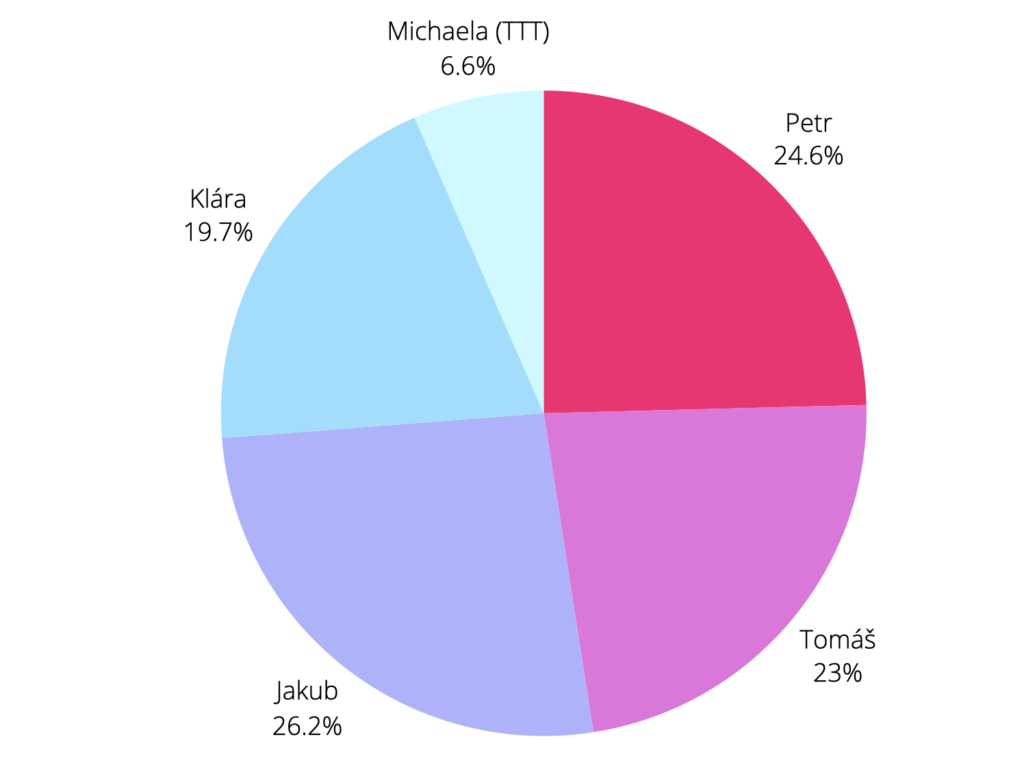
Z mého pohledu hodně záleží na tom, jak je skupina vedená. Lektor by měl zapomenout na to, že je to o něm. Není. Je to o účastnících, kteří si přišli procvičit jazyk. Pod dohledem a s vidinou zpětné vazby. Proto rozeznáváme něco jako TTT neboli teacher talking time, který by měl být omezený na minimum. Pokud se tak děje, času je více pro tebe. 

Naučila jsem se ho kontrolovat a skvělým pomocníkem je aplikace Participation & Speaking Time Tracker.  

Pokračovat budu jedním z největších mýtů o angličtině, který tu koluje, a to tím, že se od lektora naučíš víc než od někoho, kdo se daný jazyk taky učí. Už z principu to není pravda. Proč? Let me explain. 

Já jako lektor chci svým klientům vždycky rozumět a prakticky potřebuji, aby oni rozuměli mně. V překladu to znamená to, že svůj jazyk upravuju podle toho, s kým mluvím. Jinak mluvím se začátečníkem, jinak s pokročilým. 

Možná si teď říkáš, že je to pěkně na prd – ale představ si, že bych s tebou mluvila tak, jak jsem byla zvyklá mluvit se svými kolegy v Kanadě nebo mluvím se svoji druhou kanadskou rodinou. Co by ses naučil/a? Co bychom za těch 50 minut stihli? Co bych ti předala? 

Odpověď: trávil/a bys většinu našeho společného času těmito frázemi:

  • Sorry?
  • Again?
  • Can you repeat?
  • What does it mean? 

Krásné na tom je to, že každý je jiný. S každým mluvím trochu jinak a u každého hledám cestu jak něco vysvětlit/říct tak, aby tomu porozuměl na základě mé znalosti jeho angličtiny. Uf.

Poznámka pod čarou – tahle práce vážně není lehká.

Krása skupinovek je v tom, že se učíš od ostatních. Sice máte společné problémy a úroveň (čti: množství slovíček v aktivní slovní zásobě), ale Klára toho ví víc o předpřítomném čase a Tomáš zná víc slovíček o běhání. Je dokonce prokázané, že co se naučíš v terénu, to si pamatuješ už napořád. Když zamrzneš v restauraci u objednávání a nejsi schopný se vymáčknout, taky si to pamatuješ. Nebo ne? 

Já si třeba už vždycky budu pamatovat situaci z Lidlu. Krátce po návratu z Kanady jsem narazila v obchodě na Brita. Dali jsme se do řeči a řekla jsem větu: I lived in Canada. Doptal se. Poskytla jsem mu nekompletní informaci a kdybys mě teď v jednu ráno vzbudil a chtěl po mně tuhle větu, už vždycky řeknu: I used to live in Canada. V čem je rozdíl? Pomocí used to je hned jasné, že to v minulosti nějakou dobu trvalo a dnes už je to jinak. I takový detail může změnit tvoje pocity při konverzaci, vysvětlování nebo chápání významů. 

Závěrem? Neházej všechny skupinovky do jednoho pytle a naopak je vyhledávej. Jsou nekonečným zdrojem možností a informací. Neříkám tím, že individuální lekce jsou špatné. Vůbec. Mají jiné přednosti – dá se jít do hloubky, jsou flexibilnější a existují témata a situace, na které je lepší se připravovat individuálně. 

Rada: Při výběru skupinové lekce se pořádně dívej na lektora.

  • Znáš ho?
  • Jak učí?
  • Jak taková skupinovka vypadá?

Šikovný lektor tě buď na takovou pozve (pokud mu běží) nebo ti ji bude ochoten detailně popsat. Kdybych si vybírala kurz francouzštiny, šla bych do malé skupiny a musela bych si být jistá, že komunikace probíhá jen francouzsky, několikrát týdně a opravdu se soustředíme na konverzace. Bylo by mi celkem jedno o čem. 

Pro dnešek je to ode mně vše. 
C u!

Welcome to my head

Measuring your English progress

Learning by reading

Vital words for understanding

improve  /ɪmˈpruːv/ – zlepšit, vylepšit

even if /ˈiː.vən ɪf/- přestože, i když

tutor /ˈtʃuː.tər/ – lektor, učitel

each /iːtʃ/ – každý, každá věc

thought /θɔːt/ – myšlenka, nápad

goal /ɡəʊl/ – cal, směřování

(to) aim /eɪm/ – mířit, zamýšlet

yourself /jɔːˈself/ – ty, ty sám

.

strange/streɪndʒ/ – podivný, zvláštní

probably /ˈprɒb.ə.bli/ – pravděpodobně, asi

(to) compare/kəmˈpeər/ – porovnat, ve srovnání

(to) need /niːd/ – potřebovat

honest /ˈɒn.ɪst/ – upřímný

consistent /kənˈsɪs.tənt/ – důsledný, vytrvalý

(to) seem /siːm/ – vypadat (jako)

obvious /ˈɒb.vi.əs/ – žřejmý, očividný

Listen to this article and leave a comment!

I recently heard a question that got me thinking: How do you know if you’re getting better at English? Well, let me share some ideas.

Learning English on your own, without using it for work or in your daily life, can make it hard to see if you’re improving. Even if you have regular lessons with a private tutor, sometimes it feels like you’re not making progress. But there are simple ways to know you’re getting better.

Keep a language journal. Make a special journal just for your English learning. Write down new words and phrases you learn in each lesson. Share your thoughts about language topics and note any challenges you face. This journal can show you how you’re doing.

Set clear goals. Work with your tutor to create specific learning goals for each lesson or over time. You can aim to learn new words, speak more fluently, or understand better when people talk. Having clear goals helps you see your progress.

Use language apps. Try language learning apps like Duolingo. If you use them often, you can see how you’re doing.

Test yourself. There are many tests online to check your English skills. Take these tests from time to time. Make sure you check speaking, listening, reading, and writing. Keep a record of your scores to see if you’re improving.

Record yourself. This might sound strange, but recording your voice speaking English can be very useful. You can hear how well you speak and if you’re improving. Record yourself answering a few questions, and listen to them later. You’ll probably notice a big difference.

Use English in real life. Even if you don’t need English for work, try to use it in real situations. Order food in a restaurant, ask for directions or chat with people when you travel. Think about how these conversations go compared to before. If you don’t travel much, find someone to practice with. It could be at a café, in a group, or in a conversation class. Talk to different people in different places.

Watch and read in English. Keep watching movies, TV shows, podcasts, and books in English. Pay attention to how much you understand without subtitles or translations. Compare it to when you started learning.

Get feedback. Don’t be afraid to ask your tutor for feedback on how you’re doing. They can tell you what you’re good at and what needs work. Trust them if you’ve been working together for a while. They’ll be honest with you.

Be consistent. Learning a language takes time. Regular practice, even if it’s short, can help you improve bit by bit.

Remember, learning a language is a slow process, and you might not see changes right away. But if you use these ideas and think about your progress regularly, you’ll know you’re doing better in English, even when it doesn’t seem obvious.

Welcome to my head

Forming habits: the key to successful learning

Learning by reading

Vital words for understanding

intriguing /ɪnˈtriː.ɡɪŋ/ – fascinující, zajímavé
insightful /ˈɪn.saɪt.fəl/ – mít vhled do problematiky
plethora /ˈpleθ.ər.ə/ – přehršel, množství, spousta
conscious /ˈkɒn.ʃəs/ – vědomě, úmyslně
bypass /ˈbaɪ.pæs/ – obejít, vyhnout se
embark /ɪmˈbɑːrk/ – vydat se, pustit se do
intentional /ɪnˈten.ʃən.əl/ – záměrný, úmyslný
demand /dɪˈmænd/ – požadovat, vyžadovat
neglect /nɪˈɡlekt/ – opomenout, zanedbat, vynechat
endeavours /enˈdev.ɚ/ – úsilí, snaha, námaha


indulge /ɪnˈdʌldʒ/ – dopřát si, libovat si, oddávat se
roadblocks /ˈroʊd.blɑːk/ – překážka, zátaras
hinder /ˈhɪn.dɚ/ – bránit, zabránit, překazit
employ /ɪmˈplɔɪ/ – používat, užívat
consider /kənˈsɪd.ɚ/ – zvážit, brát ohled
dive /daɪv/ – ponořit se, vrhnout se do
compassionate /kəmˈpæʃ.ən.ət/ – soucitný
punish /ˈpʌn.ɪʃ/ – trestat
avoid /əˈvɔɪd/ – vyhnout se, vyvarovat se
embrace /ɪmˈbreɪs/ – přijmout, pochopit

Let’s train your ears. These are the grammar structures you’ll need for better understanding.
If you’re not in a reading mood, listen to this article. The best, of course, is to listen and follow the script.

Habits are the building blocks of our lives. It’s often said that nearly half of our daily routines are governed by habits. This statistic is both intriguing and insightful. How easy is it to cultivate a new habit? On the other hand, how challenging is it to break a bad one? These questions loom large, and the answers are not always straightforward.

In the realm of self-improvement, there is a plethora of advice, articles, podcasts, and guidance on habit formation and elimination. So, let me share my perspective.

One recent revelation I’ve had is the distinction between habits and routines. Habits are actions we perform repeatedly, often without conscious thought. Routines, on the other hand, involve consciously repeating a series of actions with a specific goal in mind. To transform something into a habit, such as learning English, it must first become part of your routine.

This concept makes sense, but how can you effectively integrate it into your life?

My first piece of advice is not to bypass the routine phase. Typically, when we embark on self-improvement journeys, whether it’s running, learning, or changing our eating habits, we tend to rush into things. We overlook the crucial step of establishing an intentional routine. Before something becomes a habit, we must first pinpoint when and how we intend to perform the activity.

Routines can be uncomfortable and demand focus and effort. Waking up early every morning at 5 a.m., daily meditation for 10 minutes, or adopting regular eating patterns are not easy transitions. In contrast, habits are effortless and automatic. They feel odd to neglect. Imagine skipping something you do daily that brings you comfort and joy. For me, not having my morning coffee is the stuff of science fiction.

So, how can you transform a routine into a habit? Begin with clear intentions. Recognise that some endeavours require effort, concentration, and deliberation. Learning English is not something you can do unconsciously; it demands focus. The duration needed to establish a new habit varies from person to person. Developing an enjoyable habit, like indulging in chocolate every day, might take a day, while committing to 10 minutes of nightly learning may take much longer. Reflect on your goal and understand your „why.“

Next, prepare for potential roadblocks. Identify the factors that have hindered your progress in the past and take steps to eliminate them. Is it a shortage of time? Procrastination? One strategy I employ, which has been highly effective, is blocking out time in my calendar. About a year ago, I set a goal to practice yoga every workday. To ensure I stuck to this routine, I scheduled daily yoga sessions on my calendar. A year later, I can’t imagine not having my daily yoga practice. It’s worth noting that these sessions only last a maximum of 30 minutes.

Consider starting with micro-habits. In my yoga example, I didn’t dive straight into 30-minute sessions. I began small, practising for just 10 minutes, gradually extending the sessions over the first three months. It happened naturally because I enjoyed it and felt better about myself.

Lastly, be compassionate with yourself. Don’t be overly critical. If you miss a day, it’s okay—don’t punish yourself. Avoid associating negative emotions with your efforts or goals. Long-term change takes time, and it’s essential to embrace this reality.

Congratulations on reaching the end of this article. If you’re working on making English a habit in your life, know that I’m your biggest cheerleader. Keep up the excellent work!